
Johne’s is a debilitating bacterial disease affecting the intestines of cattle, sheep, and goats. It is caused by the Mycobacterium avium ss. paratuberculosis bacteria (MAP). The long incubation period makes Johne’s difficult to detect and prevent. Many animals within a herd may be infected before any clinical signs are observed. Animals that look normal can still shed the bacteria and infect other animals in the herd. Detecting infections may be further complicated because signs of disease usually do not appear until the animals are adults.
by Dr. Wendy Wilkins, Disease Surveillance Veterinarian, Animal Health Unit, Saskatchewan Ministry of Agriculture
Sample Collection
- Johne’s disease testing is recommended for animals aged 18 months or older in cattle and following the second kidding or lambing (or older) in sheep and goats.
- Turnaround time will be extended for large batch submissions. For current turnaround estimates, please contact PDS at 306-966-7316.
- Additional fees may apply for samples submitted without a corresponding Excel list of animal IDs or if sample tubes are visibly contaminated (e.g., with dirt or feces on the exterior).
- Prepare an Excel spreadsheet listing animal IDs, ensuring that the IDs exactly match the labels on the corresponding sample containers.
- Email the spreadsheet to: dso@usask.ca.
- Print and attach a hard copy of the spreadsheet to a completed PDS submission form.
- A Multi-Animal Excel template is available on the PDS website under Services → Forms.
Johne’s PCR – Fecal Samples
- Use a clean plastic sleeve for each animal to prevent cross contamination between animals.
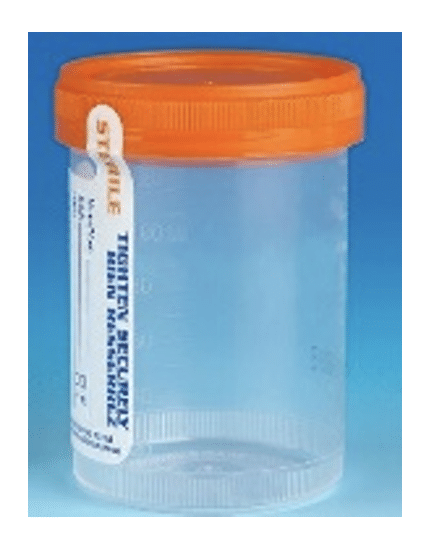
- Collect feces in a sterile, wide-mouth, screw-cap container that is durable enough for shipping.
- Ensure that each container holds a minimum of 15 grams (approximately 3 teaspoons) of feces. Samples containing less than 2 grams will not be processed.
- Secure the lid tightly to prevent leakage.
Preferred Container
Unacceptable Containers
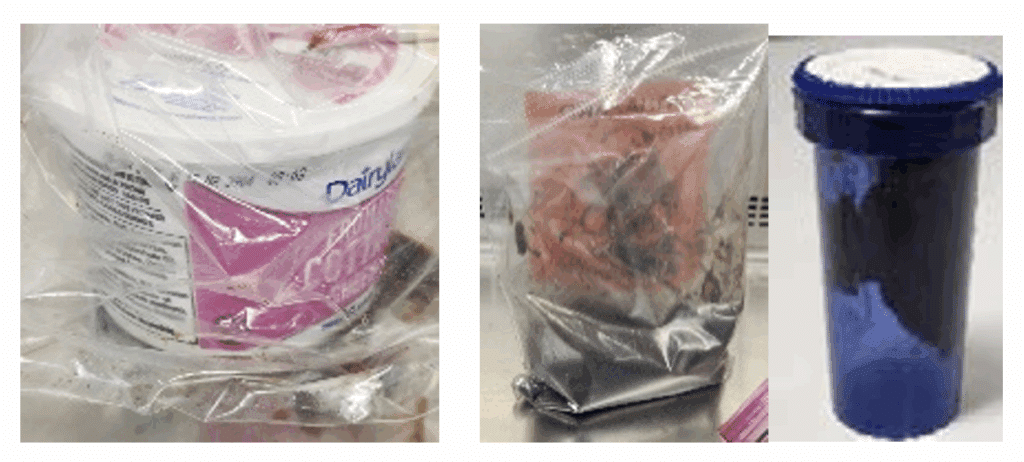
- Preferred Containers include: Sterile, wide-mouth, screw top containers.
- Unacceptable Containers include: gloves, Ziploc bags, pop-top containers, pill bottles or twirl-top bags. These may leak during transit or create aerosols upon opening, risking contamination.
- Clearly label each container with the animal ID using a waterproof marker.
- Place samples into Ziploc bags, with a maximum of 10 containers per bag. If the samples are liquid, place each one in its own Ziploc bag.
- Ship samples to the laboratory promptly after collection. Delays can affect sample quality and compromise test results.
- Store samples in a refrigerator until shipping. Avoid freeze-thaw cycles, as they can interfere with Johne’s disease detection.
- Package all materials in a sturdy, protective shipping container to prevent breakage in transit.
- For Johne’s PCR pooled testing, submit individual samples; pooling will be conducted at the laboratory.
- On the submission form, indicate clearly whether you wish to have positive pooled results tested individually (note: additional charges apply).
Johne’s ELISA – Serum Samples
Collect blood samples in a red-top tube (no anticoagulant). Ensure the exterior of each tube is clean to prevent contamination during handling.Additional charges may apply for dirty tubes.
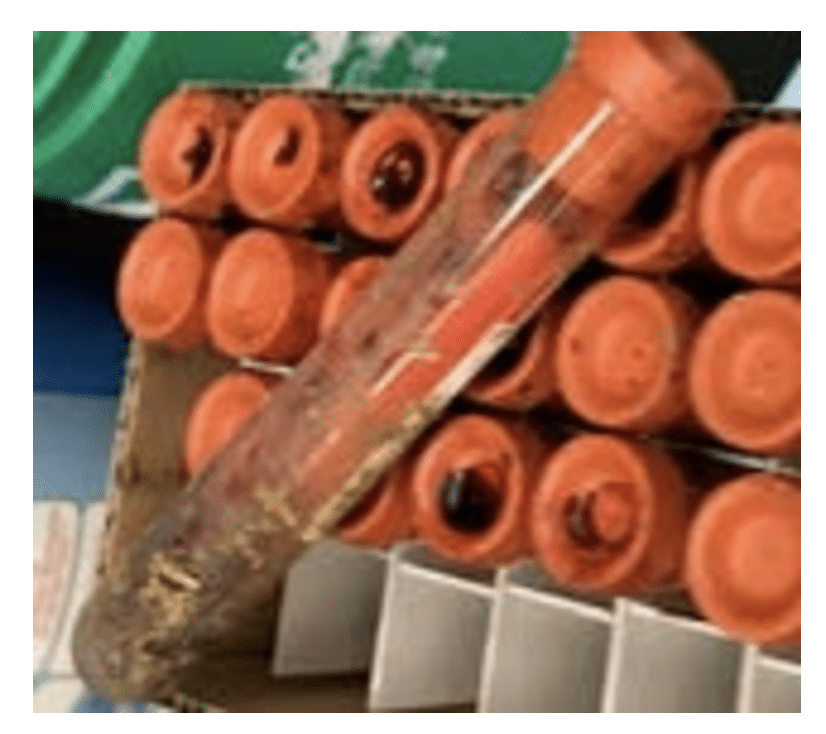
- During colder months, it is recommended to separate the serum from whole blood, as freezing whole blood can cause hemolysis, which may compromise serology results.
- This can be achieved by centrifuging the blood tube and transferring the serum to a clean, labeled red-top tube.
- Alternatively, use serum separator tubes, centrifuge them prior to shipping, and ensure serum is clearly distinguishable.
- Label each tube clearly with the corresponding animal ID using a waterproof marker.
- Ensure the tube stopper is fully and securely seated. Do not use tape around the stopper.
- If possible (but not mandatory), centrifuge samples and transfer serum to a separate red-top tube, labeling it appropriately with the animal ID.
- Arrange tubes in the shipping container in the same order as listed on the Excel spreadsheet to facilitate sample processing.
- Package all samples in a sturdy, insulated shipping container that will protect against breakage during transit.